

About Us
About Us
History of the Institution
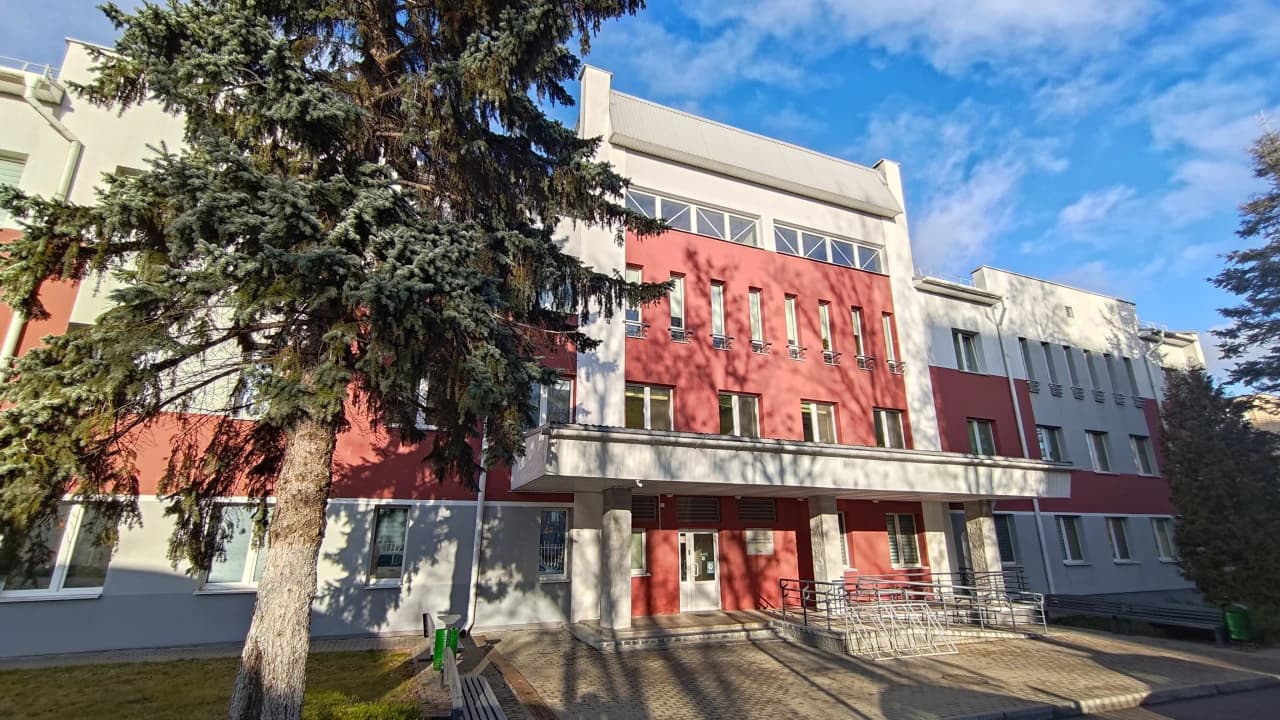
City Clinical Pathological Anatomy Bureau (CCPB) was established in accordance with Order No. 251 of the Minsk City Executive Committee's Health Department dated June 1, 1988.
Currently, the bureau is the largest pathology institution in the country, serving over 300 healthcare organizations of various types, including 13 healthcare organizations under republican jurisdiction, 30 hospitals and specialized medical centers, 75 outpatient clinics, and approximately 200 private healthcare organizations. The bureau's pathology departments perform over 1 million biopsies annually. The Bureau serves as a clinical base for specialized departments of the Belarusian State Medical University, the Institute for Advanced Training and Retraining of Healthcare Personnel of the Belarusian State Medical University, medical colleges, and also as a training base for the preparation of medical interns, laboratory assistants, and for the improvement of knowledge (internships) of domestic and foreign specialists in a number of areas of pathomorphological diagnostics.
Specialists and Equipment
City Clinical Pathological Anatomy Bureau employs a staff of highly qualified pathologists: over 30 physicians of the highest qualification category, including candidates of medical sciences, associate professors, a doctor of medical sciences, and a professor.
The bureau is equipped with modern equipment, allowing for a wide range of pathological examinations, including histochemical, immunohistochemical, immunofluorescent, and molecular genetic studies. The use of modern technologies and an expanded range of pathological techniques allow for a so-called "personalized" diagnosis: determining tumor histogenesis, identifying the primary source of malignant growth using metastatic material, and assessing the sensitivity of tumors to specific chemotherapeutic agents to prescribe appropriate combination therapy. The intraoperative cytodiagnostics method (i.e., urgent, immediate, or express diagnostics) used in practice allows the surgeon, taking into account the pathologist's report, to adjust the scope of the surgical intervention during surgery and select the appropriate treatment strategy. Modern methods of morphological examination of puncture and trephine biopsies have been implemented in practice, allowing physicians to obtain a conclusion on the nature of the pathological process in virtually any organ of the body without extensive, traumatic surgery. During repeat biopsies, they can assess the disease dynamics, treatment effectiveness, and, if necessary, adjust therapy. The bureau provides morphological support for organ and tissue transplants, including assessing the presence and nature of graft rejection reactions, which also allows for the selection of an individualized treatment regimen for each patient.
Educational and Scientific Activities
In 2019-2020, the virus and bacteriology laboratory was re-equipped and modernized, introducing PCR testing methods for both native, unfixed tissue and formalin-fixed, paraffin-embedded tissue sections (paraffin blocks). These methods enable the identification of a wide range of pathogenic microorganisms in both biopsy and autopsy specimens.
A histological slide scanner is used to create a digital archive, and the ability to store digital copies of histological images in cloud storage for telemedicine consultations, including with the participation of international specialists, has been developed.
In collaboration with the Belarusian State Medical University, the Academy of Sciences of the Republic of Belarus, and national scientific and practical centers, City Clinical Pathological Anatomy Bureau (CCPB) participates in research and implements the results of scientific research into practice. The Bureau hosts national and international seminars, webinars, and conferences.
As the largest institution in the pathology service system of the Republic of Belarus, City Clinical Pathological Anatomy Bureau (CCPB) ensures high-quality diagnostic, expert, organizational, methodological, and scientific-practical work, thereby further improving the quality of medical care for the population of the Republic of Belarus.